Tax Return Blunders That Can Cost You Money
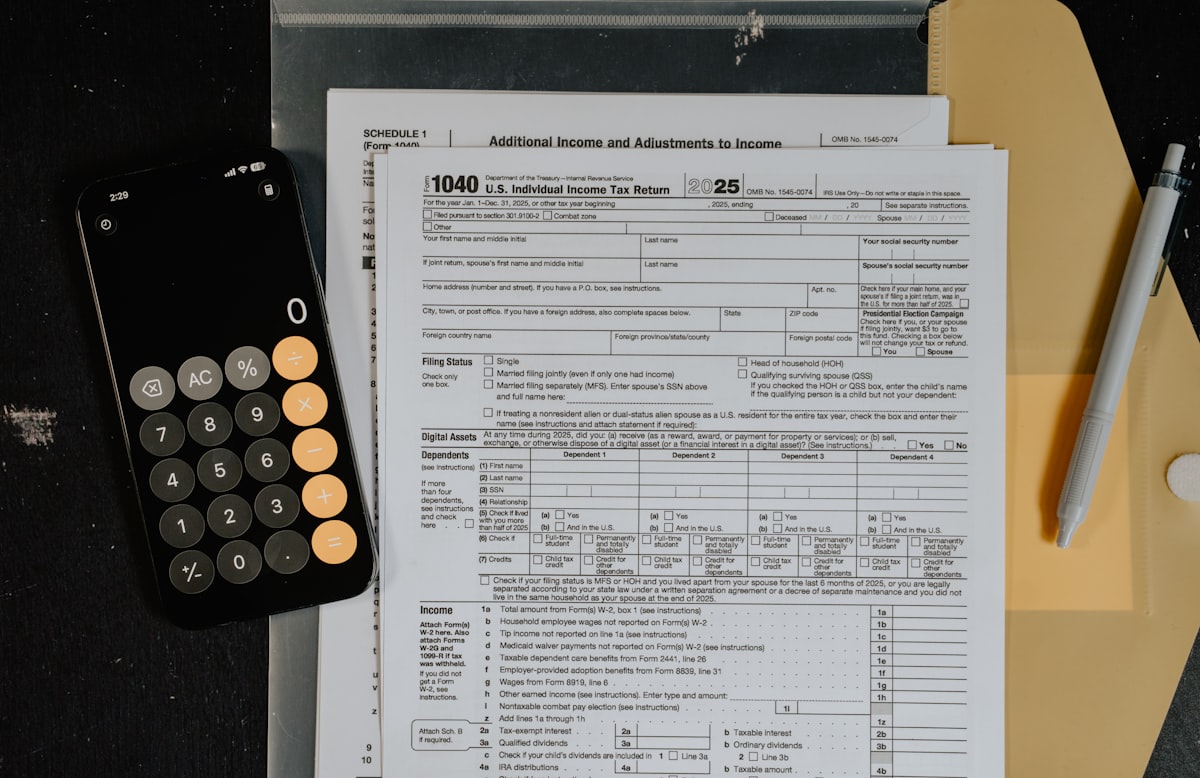
With the tax deadline approaching, it's tempting to sign and move on. But a brief review can catch a handful of items that are easy to miss — and sometimes expensive to get wrong. Even well-prepared returns rely on the information provided. During a busy filing season, some details don't always get a second look. The good news is that you don't need to review everything. A few areas tend to account for a disproportionate share of issues.
ACA Tax Credits. If you purchase health insurance through a state exchange, there can be thousands of dollars at stake when your actual income is reconciled with prior estimates. The premium tax credit is based on projected income and paid in advance to reduce monthly premiums. When income comes in higher than expected, some of those credits may need to be repaid. This often isn't a mistake — bonuses, investment gains or a stronger business year can all move the needle.
If you do face a repayment, self-employed individuals may be able to deduct a portion as a health insurance expense. More importantly, if your income is trending higher this year, updating your estimate through the exchange can reduce future subsidies and help avoid a larger surprise next April. With enhanced subsidies having expired this year, these calculations may become even more important.
Backdoor Roth IRA Contributions. This one is easy to miss and can result in paying thousands in unnecessary taxes. A backdoor Roth allows higher-income savers to work around the usual income limits using a two-step process: first, a nondeductible IRA contribution, followed by a Roth conversion. This strategy works best if you don't have other pre-tax IRA balances.
The net effect on your tax bill should be minimal, since you're converting after-tax money. The problem is that tax returns don't always reflect that "basis," which can lead to the conversion being taxed twice. A quick check is to look at line 4b of your Form 1040. If you see the full amount of your conversion showing up as taxable, it's possible something was missed. In most cases, the issue traces back to Form 8606, which tracks after-tax IRA contributions.
The Zero Basis. I recently was asked whether it was important to keep old custodian documents after moving accounts. In a taxable account, the answer is yes — your cost basis needs to carry over.
I've seen many returns where the basis of a stock sale is listed as "$0," which is rarely correct. This often happens when records don't transfer properly between custodians. It can also occur with employer stock awards, where taxes were already paid when the shares were received. If that value isn't used as the basis when the shares are sold, you may end up paying tax twice. You can spot this issue on Form 8949.
Education Tax Breaks and Credits. There are several ways the tax code helps offset the cost of higher education. Section 529 plans allow funds to grow tax-free and be used for qualified expenses, but those expenses still need to be properly reflected on your return. If not, you may see unexpected taxes or penalties. If you notice tax on line 23 of your 1040, check Schedule 2 to see if a penalty has been applied.
Another benefit not to miss is the American Opportunity Tax Credit (AOTC) for those who qualify, which can reduce taxes by up to $2,500 per year based on $4,000 of qualified expenses. One key detail: you can't use the same expenses for both a 529 withdrawal and the credit. Even if you have funds in a 529, it may make sense to pay $4,000 from other sources if your income qualifies.
While these are some of the more common areas where I've seen issues, they only scratch the surface. Even if you rely on a tax preparer or software, it's worth reading through your return to make sure it reflects what you intended. Good tax planning only works if it shows up correctly on the return.
Already filed this year? Or wondering if you may have missed something in prior years? You generally have three years to amend a return — and in some cases, that can uncover meaningful tax savings.
David Gardner is a certified financial planner in Boulder County and is admitted to practice before the IRS. He can be reached at entreewealth.com. As financial planning is only possible after knowing the client, the column is not intended to be personal financial or tax advice. Data presented is believed to be accurate at the time of writing.
Subscribe to My Newsletter
Financial insights from David Gardner — delivered to your inbox. No paywall, no spam. Unsubscribe anytime.